
Heritage as a Living Neighborhood, Not a Stage Set: On "Re-Souqification"
Salman bin Abdulla Al Khalifa over at The Gulf Between has been writing excellent articles on Gulf urbanism, covering the region's challenges in urban mobility and thermal comfort. Salman has introduced the idea of ‘re-souqification’ in Khaleeji urban praxis, he has written an entire article on this notion, but to summarize it in one sentence it is reintroducing the urbanism and social dynamics typical of souqs into contemporary city planning (There are many more layers and dynamics to Al-Khalifa’s ideas, and this is a gross over simplification so I do encourage you to read his article over at his Substack!). The idea and term is fantastic, the argument is rooted in the fact that healthy and good urbanist praxis is innately rooted in our urban cultural identity, an effective way to argue for a better built urban form with a nationalist agenda.
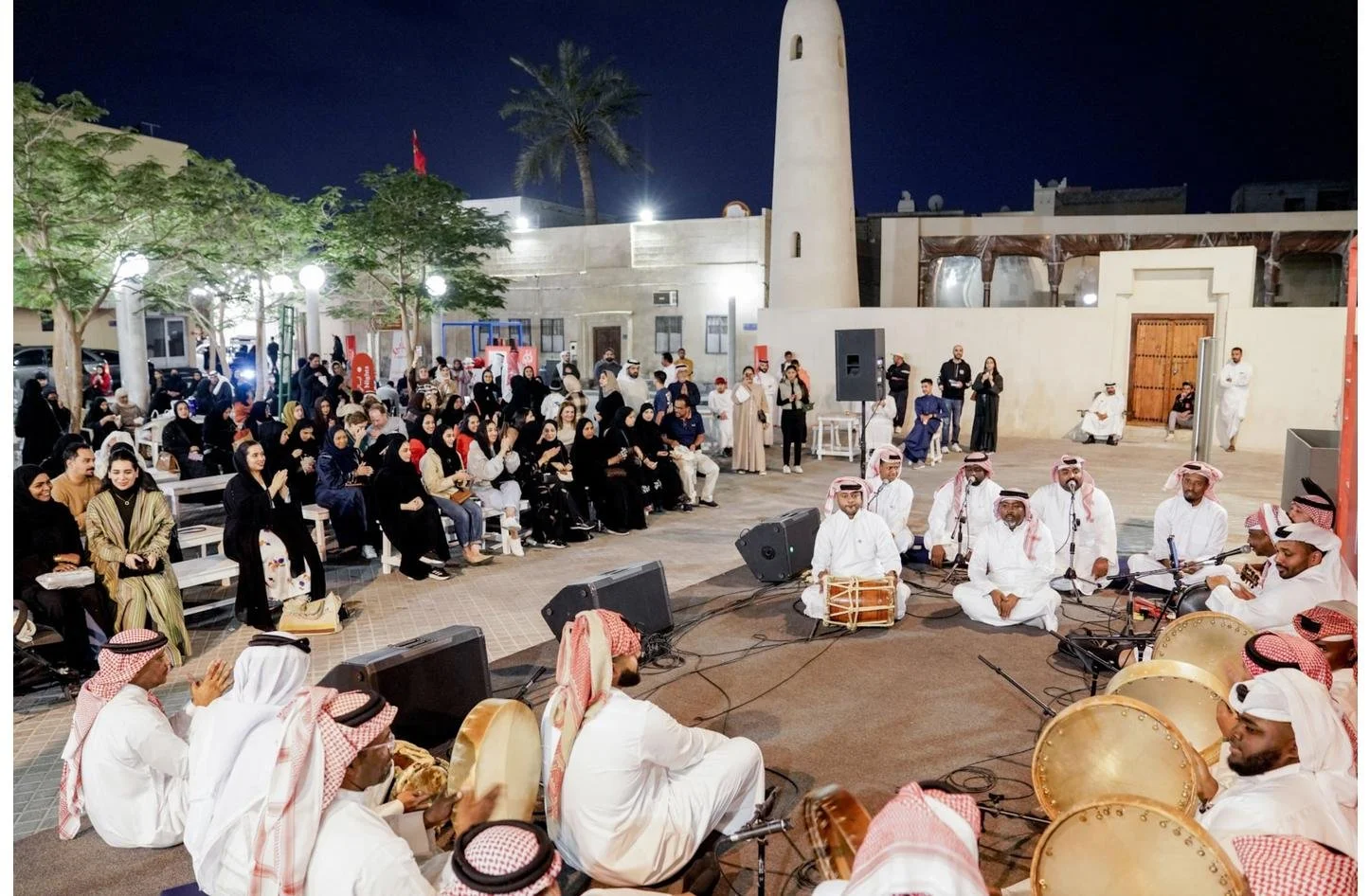
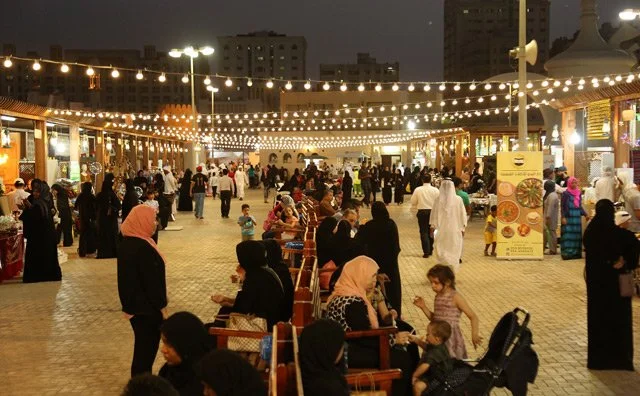
Cultural activations within the Layali Al-Muharraq event. (Source: Al-Ayam Newspaper)
Al-Khalifa and Maryam Al-Noaimi’s article, “What the Gulf can learn from a few nights in Muharraq”, spotlights Muharraq Nights as a living model of heritage being treated as living urban fabric, not a curated backdrop. By activating real streets, houses, and neighborhoods, supported by light, temporary infrastructure and local participation. It demonstrates that cultural authenticity in the Gulf comes from use, movement, and everyday social life, not from building new “heritage-themed” destinations. I’d like to expand on this notion with thoughts of my own!
It is not surprising then that other Gulf cities have started engaging with their heritage sites with similar festivities, Saudi Arabia has many initiatives all across the Kingdom, Layali Al-Qaisiriya in Al-Ahsaa, Winter at Tantora in Al-Ula, Balad Al-Fann in the old town of Jeddah, just to name a few. The United Arab Emirates has the Sharjah Heritage Days events, as well as the Sikka Art & Design Festival in Dubai. National and municipal governments have recognized the power of culture as a driver for economic development, which is why there has been a massive investment in creating these types of festivals.
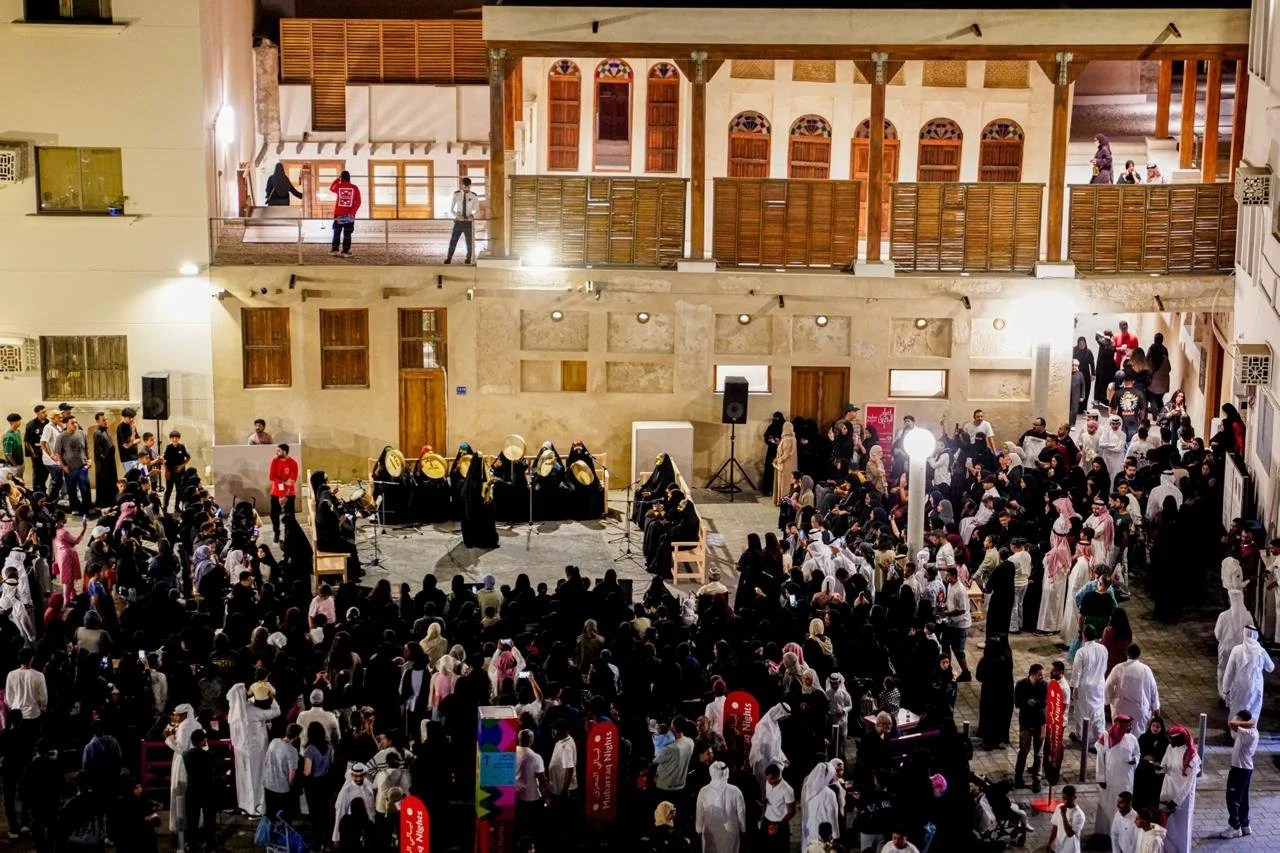
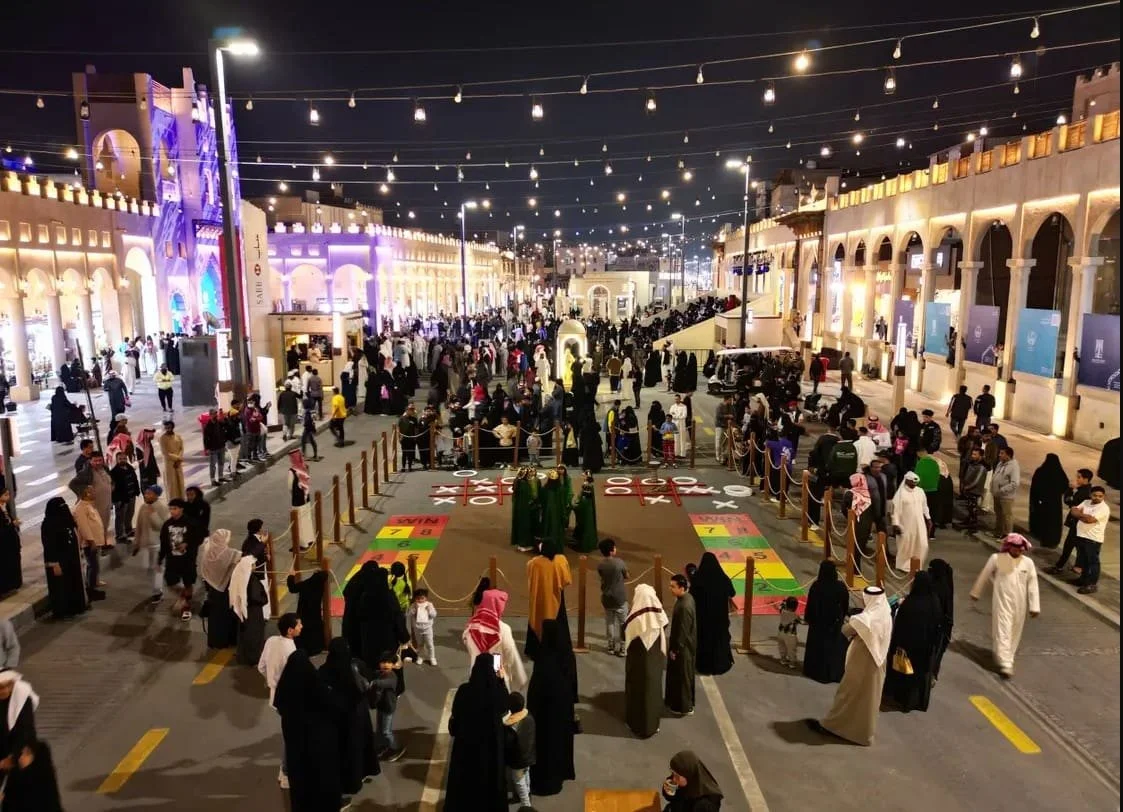
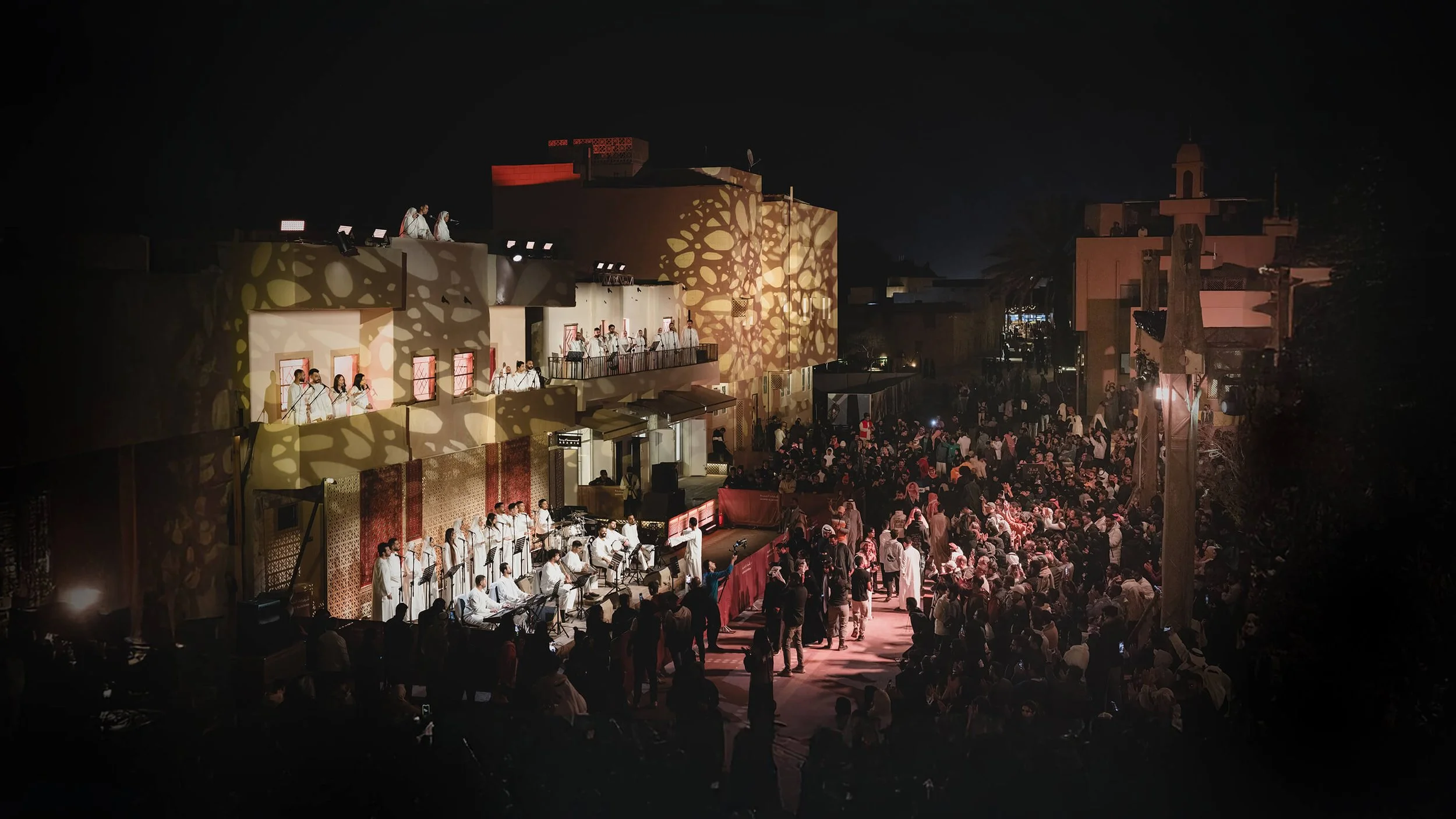
What is critical - however, is not to treat these festivals as the solution to activate heritage sites as a living part of the urban fabric. The notion of ‘resouqification’ does not stop at creating pieces of urban theatres for a few weeks of the year, but it is a holistic framework for thinking about commercial spaces in the Khaleeji urban. Like Al-Khalifa & Al-Noaimi, who have posited 4 lessons in the article, I’d like to pose 4 questions to policymakers and planners in the region to achieve real and authentic souqification.
First - Who is re-souqification serving?
In much of the Gulf, our most celebrated “human-scale” districts and heritage activations are implicitly designed for a narrow set of users: nationals, tourists, and affluent expats. Where space becomes an end-product: polished, curated, and priced accordingly. Yet Gulf cities are also defined by a large transient population of migrant workers who already inhabit old downtown cores, not because of nostalgia, but because of affordability and access to jobs, transit, and everyday services. If re-souqification is serious about restoring souq urbanism as a living social system, it must start by recognizing the current user of these spaces and asking whether revitalization will include them, displace them, or simply render them invisible.
As planners, it is easy to get absorbed in the re-souqification agenda. Particularly when its framed as part of a broader nation-building project and an effort to define and spotlight our architectural heritage and identity. But the souq is more than its image; it is also a social contract. It is shared streets, overlapping users, and an economy that remains accessible to those who rely on the city most.
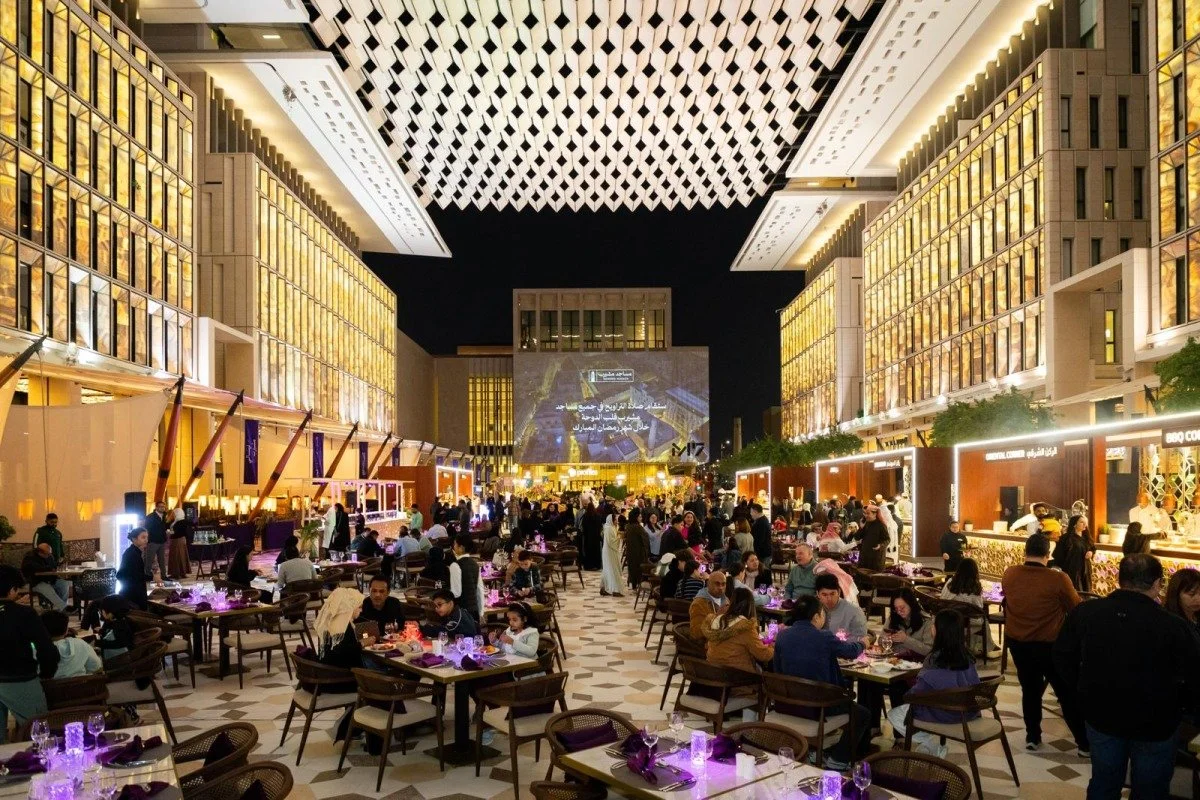
A busy night in Msheireb Downtown Doha. (Source: The Peninsula)
In practice, this question surfaces most clearly through displacement. Revitalization often brings rent escalation that quietly filters out the very users who kept these districts alive. The small traders, repair shops, cafeterias, and shared housing tenants who brought the streets alive. Tighter commercial licensing requirements privilege formal, capital-heavy businesses, while enforcement against partitioned or shared apartments removes the affordable residential base that sustains daily footfall. The result is a paradox: the urban life that justified preservation is regulated out of existence. If re-souqification is to remain faithful to its premise, planning must address affordability as deliberately as design, otherwise revitalization becomes replacement rather than renewal.
Second - How much informality, friction, and unpredictability are authorities willing to tolerate in historic urban spaces?
Part of the souq’s charm is its disorderly environment. They were noisy, overlapping, and unplanned, rather they were negotiated. These negotiated spaces resulted in a streetscape that is lively in character, with vendors spilling into walkways, goods displayed beyond shop thresholds, bargaining, chance encounters, and a constant reconfiguration of use throughout the day. Much of their vitality came precisely from this friction: the small inconveniences and unpredictability that signaled a place was alive rather than managed. Yet contemporary heritage management frameworks often aim to eliminate these conditions in the name of safety, branding, and visitor experience.
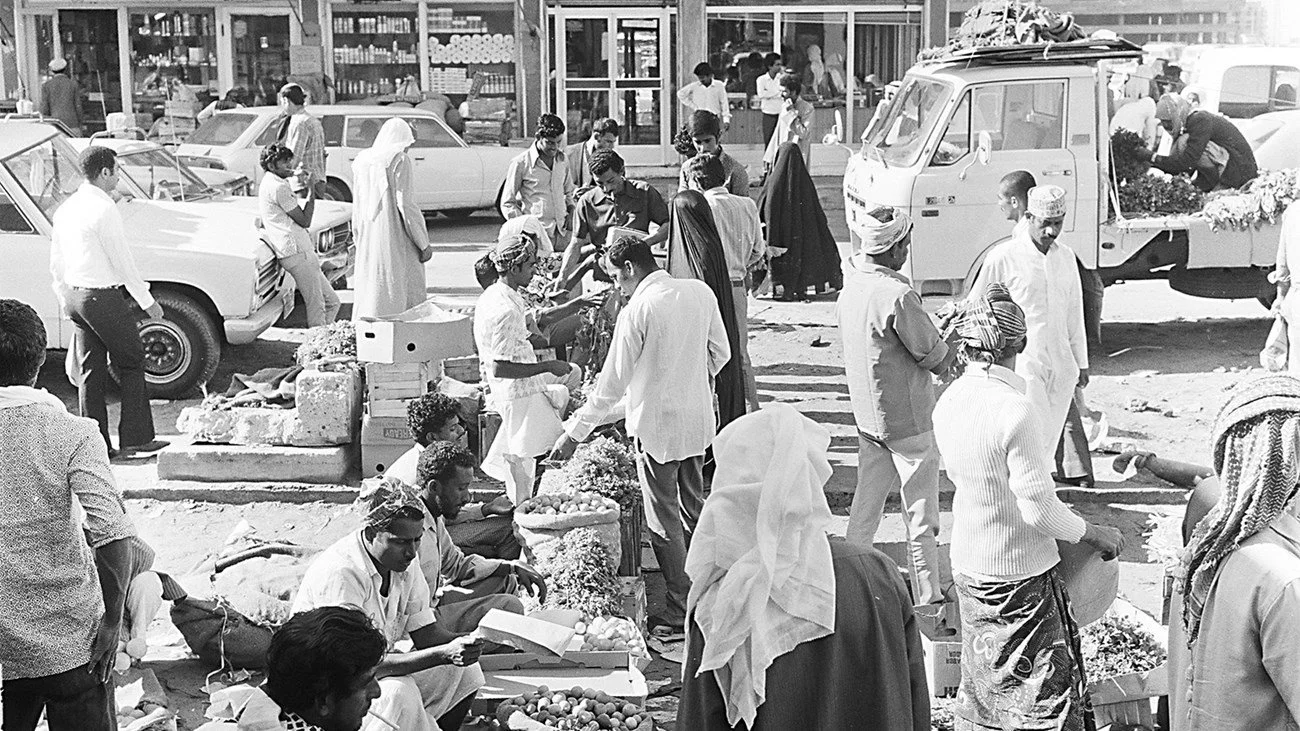
Street vendors in an old Abu Dhabi souq. (Source: Aletihad News Center)
Now I am not calling for the abolishment of regulation, but rather that municipal governance should permit some level of spontaneity. A souq reduced to circulation corridors and uniform storefronts may be visually coherent but they are socially sterile. Re-souqification therefore requires a recalibration of tolerance: allowing negotiated use of space, temporary appropriation, and minor disorder as part of normal urban function rather than treating them as failures of management.
Now that isn’t to say that our manicured and high-end spaces shouldn’t exist, they play a vital role in our urban ecosystem. Rather they should coexist with different types of souqs that naturally feed into each other. The issue arises when our manicured urban becomes the only permissible expression of public life. The authentic souq network is plural, it is both the formal and the informal, the polished and the rough, the predictable and the improvised, both paradigms serving the other. When these layers are allowed to coexist and remain spatially connected, they form a continuous urban economy rather than isolated enclaves. Re-souqification, then, is not the replacement of one model with another, but the stitching together of multiple urban conditions into a single, mutually reinforcing system.
Third - Do we want heritage districts that perform culture, or ones that produce it? Do we want heritage districts that are episodically activated destinations or actively lived in places?
The Musahar, once a familiar pre-dawn figure walking Qatari neighborhoods during Ramadan, gently waking families for suhoor.
Today, the tradition is largely revived for cultural and tourist spaces, while rarely practiced in residential neighborhoods where it once naturally belonged. (Source: Qatar Streets on TikTok)
Many heritage districts today are designed to perform culture rather than produce it. Their success is measured through programming calendars, visitor counts, and seasonal activation, where life arrives in scheduled intervals and recedes once the event concludes. Yet historically, the souq was not a venue, it was an economic and social system embedded in daily routines. The morning deliveries, afternoon trade, evening gathering, and night-time services produced culture. Not as a curated offering, but as a byproduct of ordinary use.
The distinction matters because episodic activation creates destinations, while residency creates places. A district animated only during festivals remains dependent on continuous intervention, marketing, and management, and not to commodify urbanism but it also means more cost! By contrast, a lived-in district sustains itself through everyday necessities like groceries, tailoring, repairs, services, and informal encounters.
Re-souqification therefore asks whether we are willing to prioritize permanence over spectacle, allowing housing, daily commerce, and mundane activity to anchor heritage areas so that events become an extension of life rather than its substitute.
Fourth - How comfortable are we with heritage districts evolving in ways that don’t always align with curated national narratives?
Even when historic districts remain active and inclusive, another tension emerges: whether we allow them to generate meanings beyond the narratives we planned for them. Heritage frameworks often present the past as coherent, unified, and representative of a singular national story. Yet historically, the Khaleeji souq was a hybrid space. The geographic situation of the Gulf meant that the souq was shaped by migrants, sailors, traders, craftsmen, and transient communities whose practices were not always tidy reflections of identity.
A living district will inevitably produce uses, aesthetics, and social patterns that feel ordinary, improvised, or even uncomfortable when measured against curated heritage imagery. The question, then, is whether preservation aims to protect buildings alone, or the social processes that once animated them, even when those processes complicate the story we intend to tell.
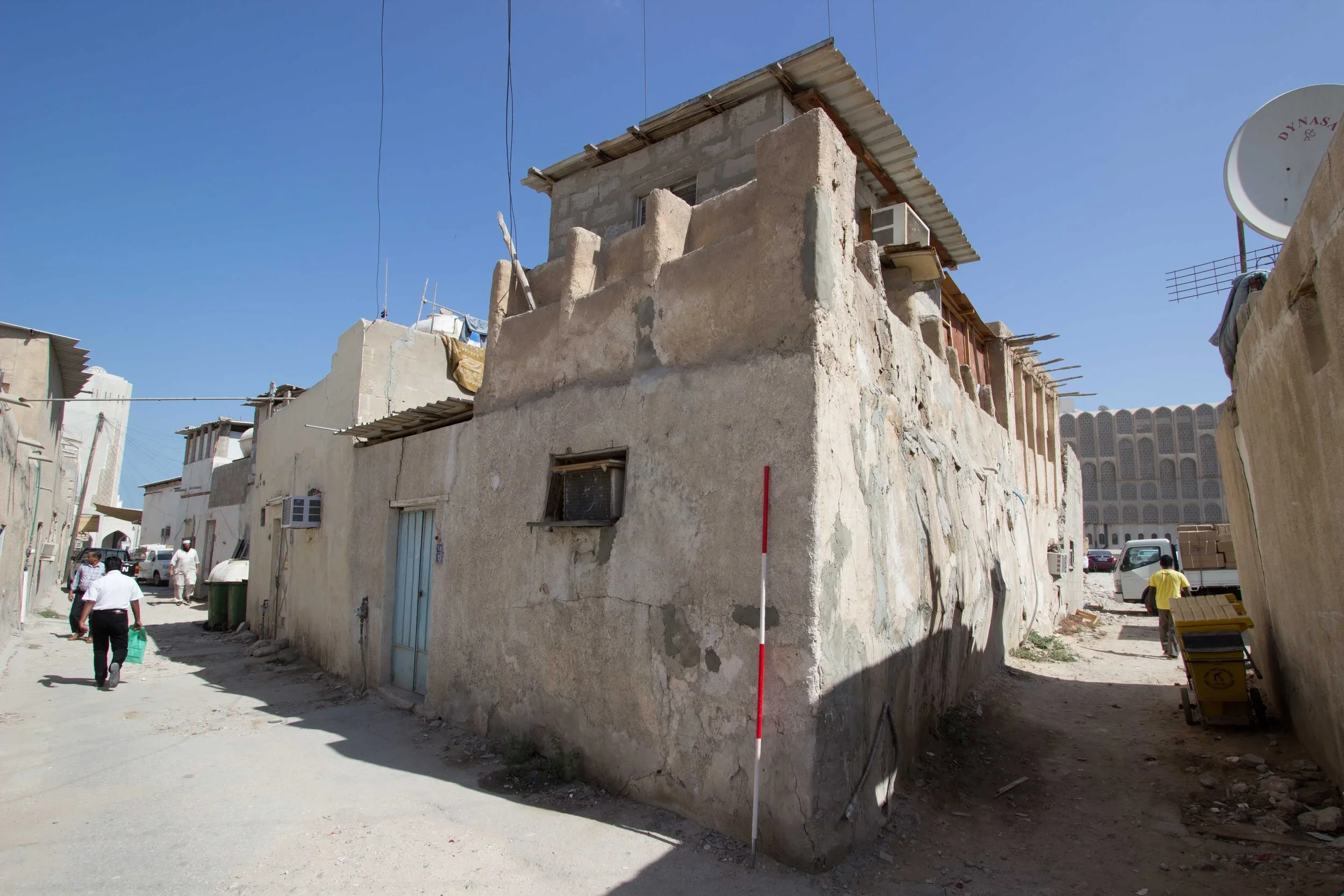
“Traditional stone-built houses in Najada” (Source: Traditional Domestic Architecture of Qatar by Daniel Eddisford)
Allowing heritage to live means accepting that culture shifts and changes over time. That culture has many authors. Re-souqification therefore requires a shift from safeguarding an image of the past to stewarding an evolving urban culture, where authenticity is not fixed in time but continuously authored by its users.
The notion of re-souqification put forth by Al-Khalifa is rich and layered, rooted in our cultural heritage and in the need to honor it authentically rather than symbolically. The argument that cultural authenticity in the Gulf comes from use, movement, and everyday social life, not from building new “heritage-themed” destinations is spot on. Authenticity cannot be achieved through architectural resemblance alone. It emerges from the conditions we allow everyday life to take who can remain, how space is negotiated, what activities are tolerated, and whether meaning is permitted to evolve beyond what we script.
Re-souqification ultimately asks not only from our architecture and urban design, but it asks much from our governance. A souq appears when affordability, proximity, mixed users, and informal exchange are allowed to coexist, not when they are curated into seasonal experiences. If the Gulf is serious about building culturally grounded cities, the task is not to recreate historic districts as heritage products, but to enable them to function as living urban systems, socially mixed, economically accessible, and open to interpretation.
The challenge, then, is not just how to make our new districts look like souqs, but how to allow our cities to behave like them again.