
Our Selfish Desire to Build
To build is one of the oldest human desires.
Before we ever understood cities, we understood the impulse to arrange the world with our own hands. Perhaps this desire to build begins early in all of us. As children, many of us built with LEGO sets, toy railroads, blocks, and miniature worlds assembled by hand. Even today, children build virtual landscapes through games like Minecraft, Roblox, and Animal Crossing. The tools may change, but the instinct remains. Man seems to possess an innate urge to shape the world around him, to leave a mark upon the earth, to take what is formless and give it form.
When I think back to why I chose to be a city planner, beyond my fascination with the built form, I realize that one of the deepest motivations was something simpler, almost childlike: the desire to point at something in the world and say, I built that.
This desire to build is not merely instinctual. It is also spiritual. Allah SWT says in Surat Hud:
“﴾هُوَ أَنشَأَكُم مِّنَ الْأَرْضِ وَاسْتَعْمَرَكُمْ فِيهَا﴿”
This verse can be understood and translated in many ways, but the phrase (وَاسْتَعْمَرَكُمْ فِيهَا) is especially interesting. Derived from the root (عَمَرَ), three different meanings can be inferred from this verse. One meaning points to life or duration, giving the sense that Allah brought mankind forth from the earth and granted them a lifetime within it. Another points to settlement, meaning that He placed mankind upon the earth and settled them in it. A third points to building, suggesting that He brought mankind from the earth and entrusted them with developing and building upon it.
In this verse is a profound call: Human beings are not only inhabitants of the earth, but we are its stewards. We are commanded to cultivate it. To tend to it. To improve it. To participate in its making with responsibility and care. There is, then, a spiritual dimension to building. The shaping of land, settlement, shelter, and place is not outside the moral life. It is part of it.
Yet between man’s natural desire to build and God’s command to build upon the earth lies an enormous moral distance, and that distance is intention.
Civilizations have often built for more than survival. We have built to inspire awe, to challenge our limits, and to chase permanence. This is why history is filled with monuments that seem to challenge the very limits of human capability: from the pyramids of ancient Egypt to the skyscrapers of today, like the Burj Khalifa. These structures testify to man’s genius, but they also force us to ask what exactly is being expressed through them. Is it service? Wonder? Gratitude? Or ego?
And perhaps that is where the danger begins.
For those of us working on the built environment, the greatest risk we must acknowledge is ego. It is the subtle belief that the work is ultimately about us: our impact, our vision, our legacy. But if building is truly a form of stewardship, then the self must be disciplined within it. A city is not a canvas for vanity. A building is not justified merely because it is impressive. A space must answer a higher standard than spectacle.
It is easy to speak of legacy in architecture and planning. The built environment seduces us with permanence. A building can outlive its designer. A street plan can endure for generations. A skyline can become synonymous with a nation’s identity. But perhaps that is precisely why this work demands humility. The temptation of ego is built into the profession itself.
When God calls upon us to develop the earth, the call is toward responsibility. To build, in its highest sense, is not merely to create form, but to improve life. It is to ask whether a place dignifies its inhabitants. Whether it eases hardship. Whether it nurtures community. Whether it brings beauty without arrogance, efficiency without cruelty, and order without alienation.
This applies at every scale. It applies to the planning of cities and neighborhoods, but also to the design of a single room in a modest home. The same question should follow every act of building and design:
How does this serve the person who will inhabit it?
Has it made life better?
Has it fulfilled a purpose beyond my own self-image?
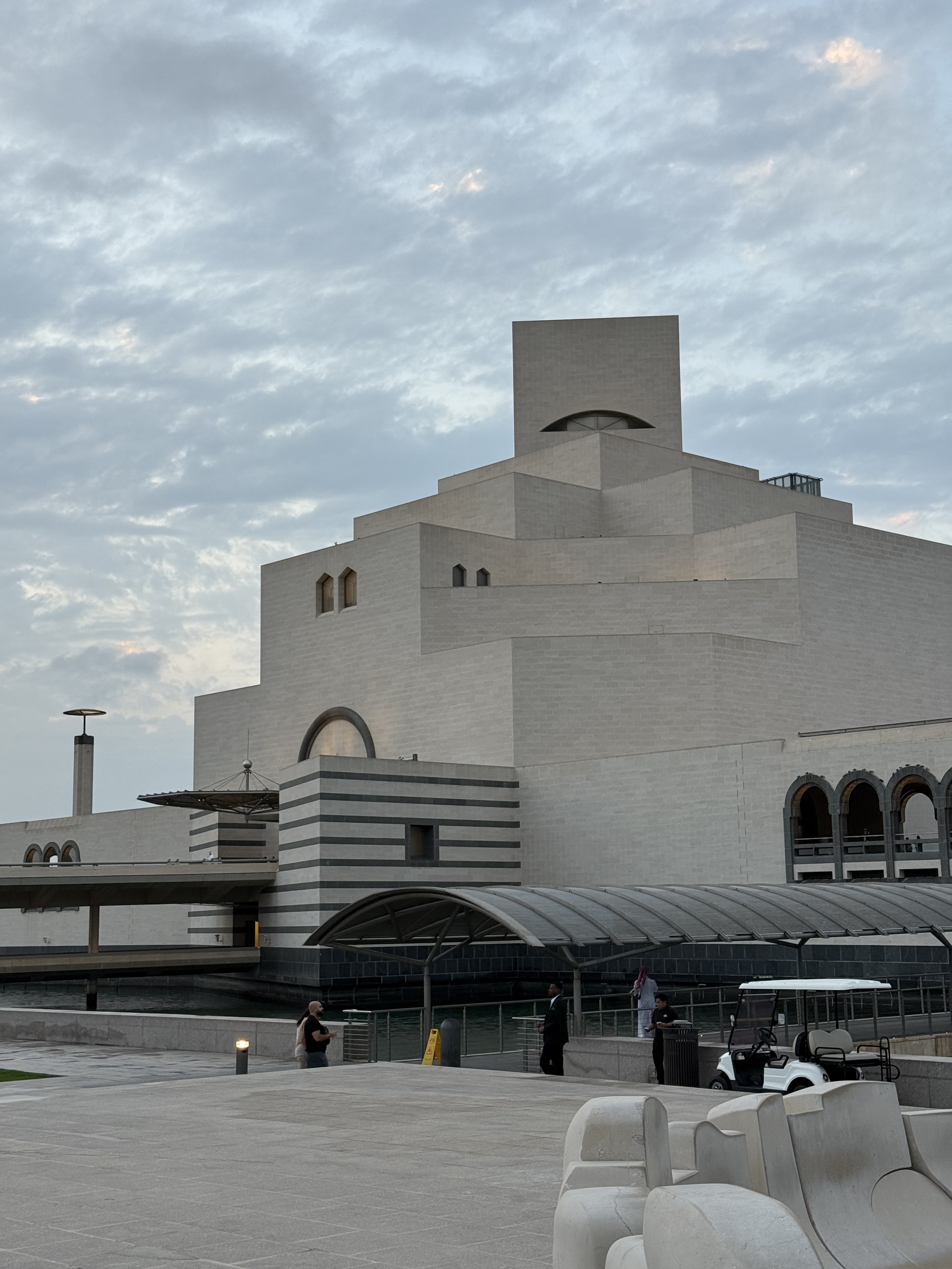
The figure of the “starchitect” has long provoked debate within planning and architectural discourse, particularly in relation to nation-building. On one hand, many iconic projects are thoughtful, generous, and attentive to the communities they serve. For instance, in designing Doha’s Museum of Islamic Art, I.M. Pei famously spent six months visiting mosques, forts, and palaces across Spain, Tunisia, Egypt, Syria, and Turkey, to ensure that whatever he designed speaks to the rich history and culture of Islamic building practices.
On the other hand, it is difficult to pretend that ego is absent from such works. Pei insisted that the museum be placed on reclaimed land off the Corniche, to protect his building from being occluded by future developments around it.
The signature, the spectacle, the global recognition, the cult of authorship, all of it complicates the purity of intention. Perhaps that is the dilemma of modern architecture itself: that even when it serves, it often also performs, and carry the unmistakable imprint of self-mythology.
I’m not sure if my points and thoughts arrive at a neat conclusion. Perhaps what I am really trying to articulate is a plea. First to myself and then to others who shape the built world: to loosen our grip on ego.
To build while remembering how small we are.
To shape the earth without worshipping our own hand in the process.
To resist the temptation of legacy as an end in itself.
To build not so that history remembers our names, but so that people may live better, more dignified lives.
I have also created a visual translation of this article as a carousel on Instagram, please have a look at it here.